

Drinkable collagen is hydrolyzed collagen (small peptides) that dissolves in water or a beverage and is consumed daily. It often comes in ready-made sachets or as a powder in a container. To choose the right drinkable collagen, focus on three things: it should be hydrolyzed, the dosage should be clearly stated on the packaging, and you should drink it every day for at least 8 to 12 weeks, which is the duration used in most studies that measured its effects on the skin.
In this guide, we explain simply: what happens to collagen after you drink it, the difference between sachets and powder, how to read the label, and common mistakes that can ruin the benefits of the course.
What is collagen for drinking? And how does the body process it?
Collagen is a naturally occurring protein found in skin, hair, nails, and joints. Its molecules in their original form are long chains. In drinkable supplements, collagen undergoes hydrolysis , breaking it down into smaller peptides, making it easily soluble in water. This is sometimes called "hydrolyzed collagen" or "collagen peptides."
Does any of it actually reach the bloodstream? In a Japanese study where healthy volunteers drank between 9.4 and 23 grams of hydrolyzed gelatin, collagen-derived peptides appeared in the blood, most notably a peptide called Pro-Hyp, reaching peak levels one to two hours after consumption ( Iwai et al., J Agric Food Chem 2005 ). This doesn't mean that collagen "transfers" unchanged to your skin, but it does indicate that the body absorbs small amounts of it.
What do studies say about drinking collagen and the skin?
- A systematic review and meta-analysis of 19 randomized double-blind studies on 1,125 participants (95% of whom were women) found that hydrolyzed collagen supplementation was associated with improvements in skin hydration, elasticity, and wrinkles compared to placebo, with use for approximately 90 days ( de Miranda et al., Int J Dermatol 2021 ).
- In a study of 72 women over 35 years of age, the first group drank ampoules containing 2.5 grams of collagen peptides with vitamin C, zinc, and biotin for 12 weeks, and improvements in hydration, elasticity, smoothness, and skin density were recorded compared to the placebo ( Bolke et al., Nutrients 2019 ).
In summary: Drinking collagen supports skin hydration and elasticity with continued use, and results appear gradually and vary from person to person. If you'd like to know when to expect to see a difference, read our guide , "When Do I See Results from Collagen?"
Drinkable collagen: sachets or powder in a box?
Both forms contain almost the same collagen; the real difference lies in comfort and consistency .
Individual bags (sachets)
- A ready-made, measured dose in each sachet; you don't need a spoon or guesswork.
- Easy to pack in your bag, for travel and work.
- It protects you from moisture because each bag is individually sealed.
- This will help you easily know if you forgot a day: count the remaining bags.
The powder is in a large container.
- It is often more economical for large quantities.
- You need a measuring spoon, and the dosage may vary from time to time.
- The box is opened every day, so you need to close it properly and keep it away from moisture.
If your challenge is daily commitment, bags are often the easiest option, as most studies have applied collagen daily for several consecutive weeks.
How to choose a collagen drink? 5 things on the label
1. Hydrolyzed
Look for the words "hydrolyzed" or "collagen peptides." This is the form used in most of the studies mentioned above. If you'd like to understand more about particle size, we have a full article on the Dalton in collagen .
2. Source: Marine or Bovine
Marine collagen is extracted from fish, while bovine collagen comes from cows. Many women prefer marine collagen for personal or nutritional reasons. We compared them in detail: marine versus bovine collagen?
3. Clearly written dosage
Studies have used daily doses ranging from 2.5 to 10 grams of hydrolyzed collagen for 8 to 24 weeks ( Choi et al., J Drugs Dermatol 2019 ). In a German study of 69 women, a daily dose of 2.5 grams for 8 weeks resulted in improved skin elasticity compared to a placebo ( Proksch et al., Skin Pharmacol Physiol 2014 ). It is important to ensure the dosage is clearly stated on the packaging and to adhere to it exactly.
4. Vitamin C in the formula
Vitamin C contributes to the normal formation of collagen in the skin ( Pullar et al., Nutrients 2017 ). Having it in the same sachet saves you from buying it separately. And if you'd like to support your body through food as well, check out collagen boosters .
5. Supporting components and manufacturer information
Ingredients like hyaluronic acid and biotin are common in drinkable collagen formulas. Make sure the ingredient list is complete and clearly labeled, and that the country of origin and expiration date are clearly stated. For more tips, read our article, "7 Things to Read on a Marine Collagen Bottle ."
The correct way to drink collagen: step by step
- Follow the instructions on the box first: the amount and type of water (cold or room temperature) varies from product to product.
- One sachet or dose per day: Do not double the dose to speed up the result; regularity is more important than quantity.
- Stir well: Hydrolyzed collagen dissolves quickly, but stirring prevents any powder from remaining at the bottom of the cup.
- Choose a consistent time each day: morning or evening, or whatever time is easiest for you to stick to. We discussed this in detail in the section on the best time to drink collagen .
- Complete the course: The studies lasted between 8 and 12 weeks or more, so don't judge the result after two weeks.
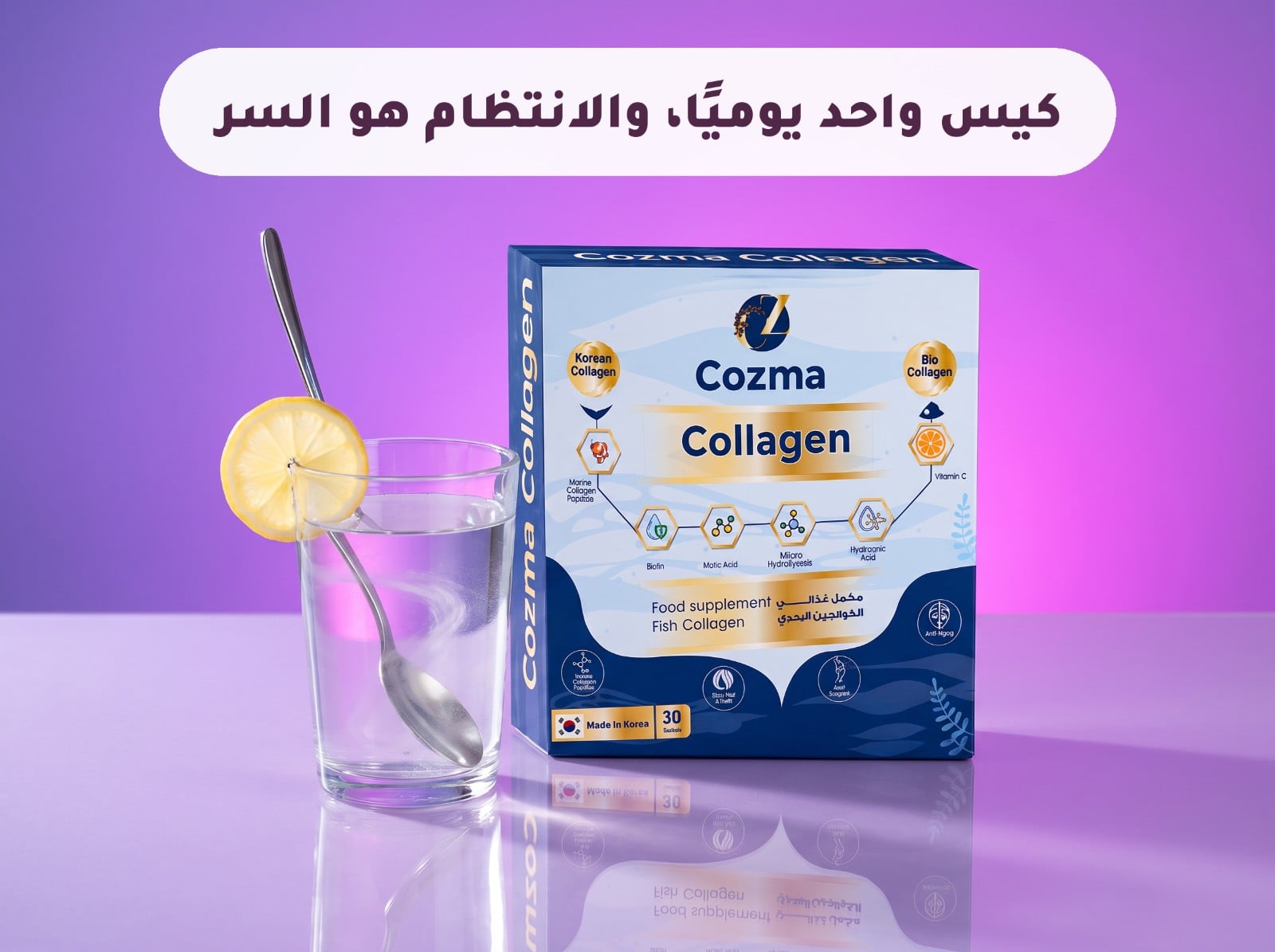
Small tips make a difference
- Put the bags next to your toothbrush or your coffee cup so you don't forget them.
- Drink enough water throughout the day; collagen is part of a routine, not a substitute for it.
- Make sunscreen a consistent part of your morning routine with a collagen cup.
Quick comparison: Sachets and powder
- Dosage accuracy: The sachets are pre-measured, and the powder is measured using a measuring spoon.
- Travel and work: The bags are easy to carry, and the powder needs an additional box or container.
- Protect from moisture: Each bag is individually sealed, and the powder container is opened daily.
- Monitoring compliance: With bags you count the rest, and with powder it's hard to know if you missed a day.
Suggested weekly routine with drinking collagen
Drinkable collagen works from within over time, and you can add a simple external care touch. Here's an easy routine you can follow:
- Every morning: a sachet of collagen in a glass of cold water, followed by a gentle cleanser, moisturizer, and sunscreen.
- Once a week: Apply a collagen mask to clean, dry skin and leave it on until your skin absorbs it. We explained what the mask actually does in the collagen mask: Does it benefit your skin?
- Every two weeks: Photograph your skin in the same lighting and location, so you can compare it to yourself instead of relying on feelings.
At the end of each month: Review how many bags you missed, and try to reduce the number of missed days in the following month.  ]
Common mistakes with collagen for drinking
- Stopping after a week or two: Most studies measured results after at least 8 weeks.
- Drinking "when I remember": Intermittent drinking weakens the benefit, and regularity is the secret.
- Relying on collagen alone: The supplement is part of a comprehensive routine that includes good sleep, a balanced diet, and daily skincare.
- Buying a product without clear information: If it doesn't have a dosage, ingredients, or country of origin, it's best to avoid it.
Cosma Collagen: Drinkable collagen in daily sachets
Cosma Collagen is a hydrolyzed Korean marine collagen (types 1 and 3) in daily sachets, each weighing 7 grams. It also contains hyaluronic acid, vitamin C, biotin, and L-lysine. Dissolve in a glass of cold water. It has a mild berry flavor, and the box contains 30 sachets, enough for a full month.
- Cosma Collagen 1-month course + free collagen mask course — 495
- Cosma Collagen 3-month course + 3 free Collagen Mask courses — 1330 SAR, suitable if you want to complete the 12-week period used in the studies.
Frequently asked questions about collagen for drinking
Is collagen in drink form better than in pill form?
The most important thing is the dosage and consistency, not the form. However, collagen in liquid form allows for doses measured in grams in a single sachet, whereas pills might require a large number of capsules to achieve the same amount. Studies have used daily doses between 2.5 and 10 grams.
When will I start to notice the results of drinking collagen?
Studies that measured its effect on the skin typically lasted between 8 and 12 weeks, and meta-analysis indicated a usage period of approximately 90 days. Results vary from person to person.
Should I drink collagen on an empty stomach or after eating?
Follow the instructions on the box and choose a consistent time each day that you can stick to. For example, Kozma's instructions: one sachet in a glass of cold water, preferably in the morning.
Is collagen safe to drink?
A systematic review of 11 studies involving 805 participants described collagen supplements as generally safe and reported no side effects ( Choi et al., 2019 ). However, if you are pregnant, breastfeeding, taking medication, or have a fish allergy, consult your doctor before starting.
Start your daily routine
If you decide to try drinking collagen in an easy and regular way, start with a one-month Cosma Collagen course + a free collagen mask for 495 : one sachet every morning, and a glass of cold water, and let regularity do the rest.
This product is a dietary supplement and not a medicine. Consult your doctor if you are pregnant, breastfeeding, or taking medication.